
Orbán is out.
Europe Last Week

After 16 years, Hungary enters a new age under Péter Magyar. He stays right-wing with a hard line on migrants. But pro-EU, he smooths out veto risks.
Hungary’s output is tiny— just 1.1% of EU GDP. Still, it forms part of the bloc’s car and battery lines. The new government may unlock billions in EU Funds, and welcome links with firms abroad. It will come with time.
More vital: EU policy will be easier on tough questions. For years, Hungary clogged aid for Ukraine, Russian sanctions, and defence policy.
The Greens are level with the UK’s old guard. Recent polling shows them rivalling Labor and The Conservatives.
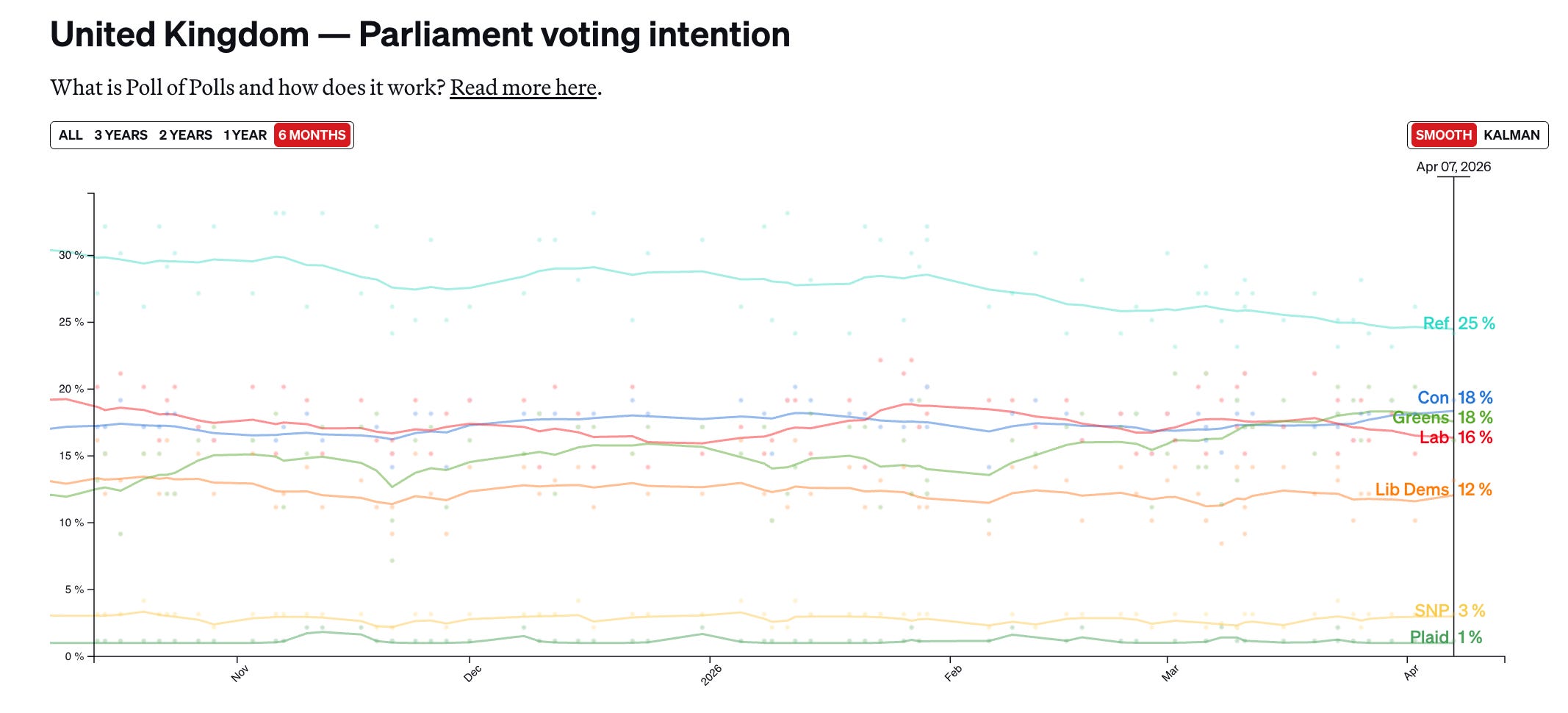
Mimicking Zamdani’s NY playbook, they have evolved into eco-populists. This is not the end of Jeremy Corbyn’s brand, whose “Your Party” sprout last year. Green gains capture voter demands. If they want more intervention, they grab what works. The Green ranks swelled to 200,000 within a year.
Labour support has collapsed in opinion polls, the Greens have sought to court their historic electoral coalition of city-dwelling graduates, young people and Muslims, fighting aggressively on a pro-Palestine ticket. The party has also deprioritised the environment as its main issue in favour of a new focus on the cost of living crisis. (FT)
This fits the classic shift from long-term hopes to short-term needs. With high prices still stinging, voters are more concerned with their immediate cost pressures. Parties adapt accordingly. You can expect more proposals to control prices and redistribute wealth.
Under a green flag, don’t count on business costs falling.
Commerzbank still resists a merger with Unicredit. The Italian rival has claimed a 29% stake. It has sway, but no ring. On a multi-year jump, the italian bank is hoping to breed a pan-European asset allocator.
Yet, there are politics. Germans guard their local banks. Commerzbank is small, but it feeds the Mittelstand— Germany’s industrial gut. If Unicredit takes over. Berlin’s grip over vital industrial policy might soften. Power might shift to Italy, whose capital markets are not so trusted.
The EU might have a single market, but EU banks are siloed. French banks lend home; Germans mainly lend to german businesses. Lending is mostly caged by the nation. Capital doesn’t flow efficiently in Europe. This creates pockets of glut or scarcity in capital.
It’s an old pain in European industry. EU firms can’t scale across Europe, because laws and support cling to national forms.

The EU is investigating France’s plan to subsidise EDF Reactors. The French state wants to subside a +€70bn project to build six nuclear reactors. The EU fears it promotes promote the market power of France’s electricity champion.
On massive energy projects, subsidies cushion decade-long risks. They are capital hungry and snag on red tape. The EU is right to be concerned with market competition. But it caps the growth of true European titans.
In Europe, energy-heavy firms between nations face wildly different energy costs. Consistently lower energy costs usually require economies of scale and better regulation. Instead, energy companies are stuck within a nation, without the perks of a unified market.
Long-term bets in Nuclear look hot at the moment, but they still carry heavy political risks.
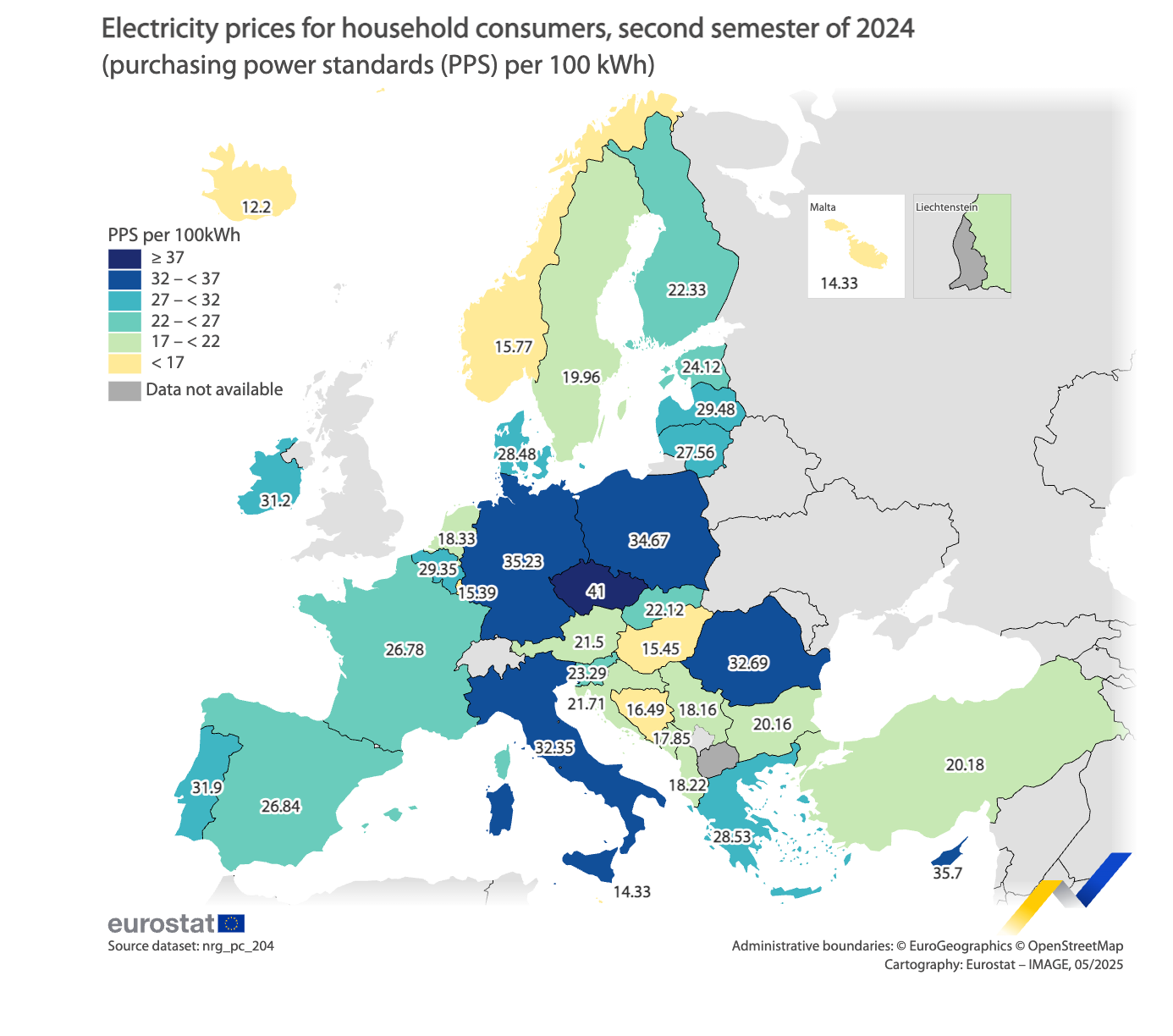
Source: Eurostat