
Is Conservatism Just Giving Up To The Past?

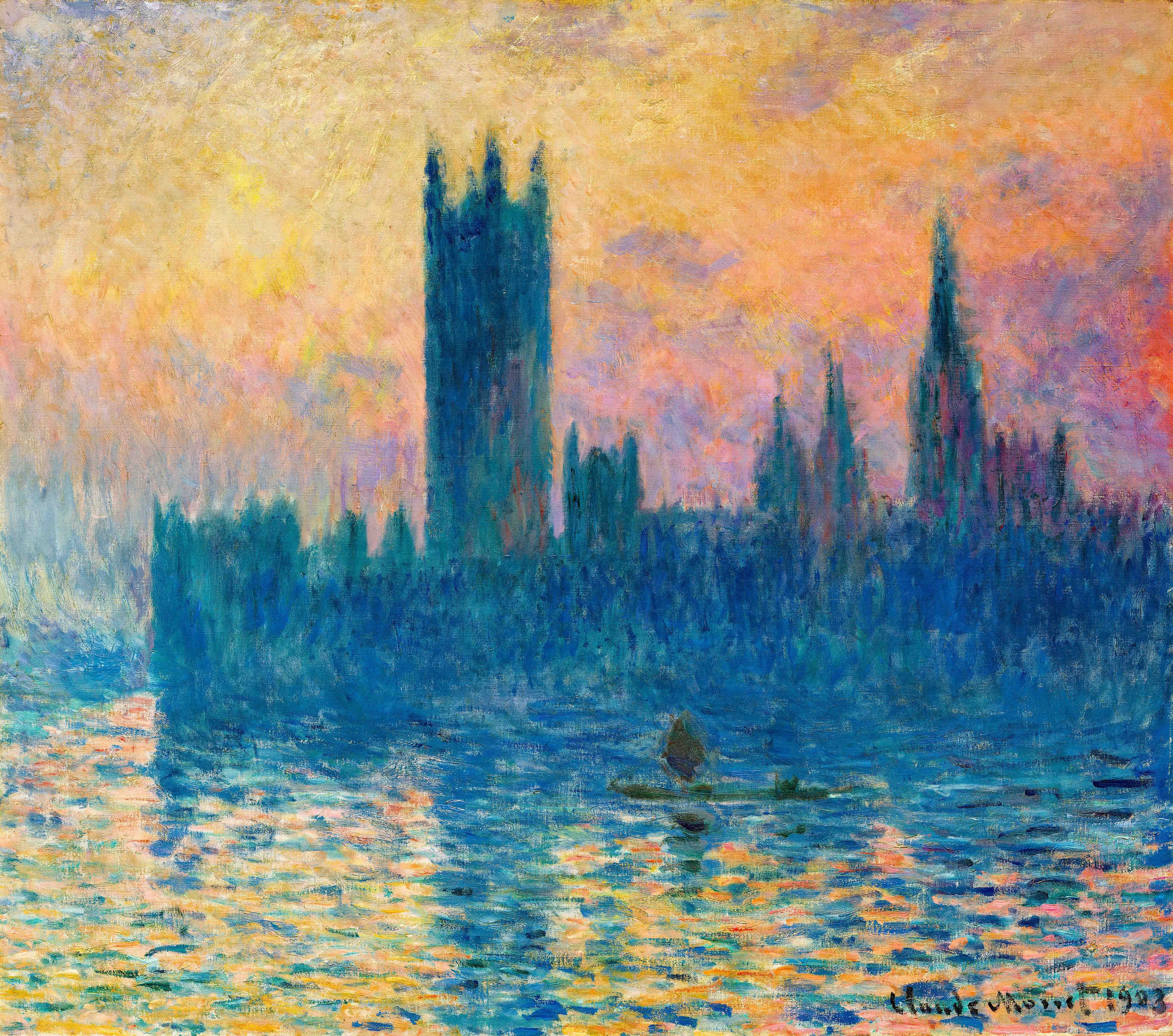
London’s beauty raises a question conservatives rarely ask: if Westminster Palace were destroyed today, could we build anything better?
Even with unlimited money, men, and stone, could we truly create something beyond what it was? I doubt it, and in this, I understand the conservative shtick. But Isn’t that an admission of defeat? You look at what past generations built and say, “Ah!”, throw your hands in the air, “We can’t do better,” and walk away.
The French had their Revolution in 1789. Centuries-old institutions were torn apart. Across the Channel, the English looked on in horror. One politician, Edmund Burke, condemned what he read: he believed the revolutionaries’ efforts would bring about woes far worse than the ancien régime.
The past, he argued, held its own wisdom. The state was a social contract; not just among the living, but between the dead, the living, and those yet to be born. The inherited privileges and rights of the Magna Carta, the Crown, and the peerage were to be passed down like family heirlooms. If they had survived, it was for good reason.
Thomas Paine absolutely snorted at this. In Rights of Man, he ridiculed Burke for believing the dead had authority over the rights and freedoms of the living. Government, Paine argued, was created by the living. It should serve them, not the dead. Marx and Engels were more cynical. To them, bourgeois conservatives like Burke were simply trying to protect their own position.
What do conservatives care about? Immigration? Nationhood? Crime? Perhaps now, but not always. Remember, it was Ronald Reagan —Trump’s darling — who signed sweeping legislation to legalise undocumented immigrants. The first welfare state was built not in liberal havens, but in militaristic Germany under Otto von Bismarck. There is no uniquely conservative policy.
This was Micheal Oakeshott’s point. In On being Conservative, the English philosopher carefully avoided form over substance. What he described was a predisposition—a general way of seeing and acting in the world. A psychological bent.
How this predisposition manifests depends on the present. We can only ever imagine, think, and act in the present; even our understanding of the past is shaped by it. If the present feels stable and secure, the conservative instinct is to protect it. If the present is weak or unsettled, the conservative turns to the past. That’s how you get the Romantics, or the Pre-Raphaelites. The present felt dead, so they reached back to rediscover something new.
Oakeshott’s most fascinating comment is this: at its heart, the conservative is concerned about identity. Who would have thought? A conservative finds identity in himself and his circumstances, from church, town, and nation, and feels compelled to preserve it.
That’s why, for conservatives, change isn’t a virtue in itself. It’s a potential threat to identity. They are skeptical of innovation or reform. The burden of proof lies with the change. It must show it can definitely improve the problem without risking some undefined worse.
That is the conservative’s dictum: a known good is not lightly to be surrendered for an unknown better.
This predisposition cuts across ideologies. The ideas themselves are irrelevant. Look at the leadership of the Chinese Communist Party, sitting expressionless in their red seats of power. Are they anything like the floppy-haired Marxist from campus? Any idea can be treated conservatively, even communism.
Conservatism isn’t fear of the future. Nor is it giving up, saying nothing can change. It’s a kind of scepticism about change.
We can’t rebuild the past. We shouldn’t try. Even perfect reconstruction becomes gross nostalgia—an old man in a Napoleon costume. That’s exactly why we cherish what we inherit. It can be lost, but not returned. That makes us all a little conservative inside: if you think you can do better–Great. But prove it first.
Image. Claude Monet, The Houses of Parliament, Sunset. 1903.
